

 Fifi
Fifi 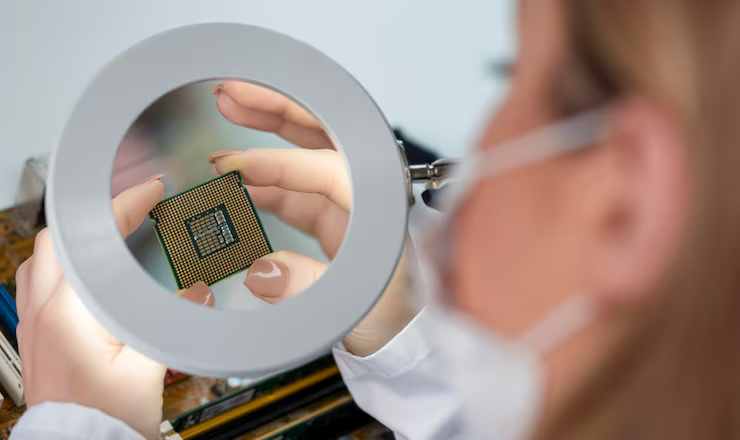
Every modern electronic device—phones, cars, solar panels, medical sensors—depends on one unglamorous but essential building block: the semiconductor silicon wafer. If you’re designing, prototyping, or running production in microelectronics, MEMS, photonics, or materials science, the wafer you select has a direct impact on yield, device performance, and cost. Yet wafer buying is often treated like a checklist item, rather than a critical engineering decision.
This guide breaks down what a semiconductor wafer is, the specifications that matter most, and how to select the right substrate for your use case—without overbuying or under-specifying.
What a Silicon Wafer Actually Does
A silicon wafer is more than a “base” for fabrication. It is a carefully engineered crystal substrate that must remain stable through harsh thermal cycles, chemical processing, and repeated deposition/etch steps. The wafer’s crystallographic orientation, doping profile, resistivity, thickness, and surface finish determine how devices behave and how consistently your process runs.
If you’re sourcing a semiconductor silicon wafer for research or manufacturing, the goal is not just “silicon,” but silicon with the right electrical and physical characteristics for your target device.
For organisations that want a wide selection of standard and custom options, you can explore semiconductor silicon wafer offerings from University Wafer as a starting point for comparing specs by application.
Key Specifications That Matter Most
1) Diameter and Thickness
Common diameters include 100 mm, 150 mm, 200 mm, and 300 mm in high-volume manufacturing, while R&D frequently uses smaller sizes or diced pieces. Thickness usually scales with diameter to maintain mechanical strength. If your tools are set up for a specific wafer size (e.g., a spin coater chuck or photolithography carrier), match the diameter first, then confirm thickness tolerances.
2) Crystal Orientation
Orientation affects carrier mobility, etch rates, oxidation behaviour, and surface properties. Typical orientations include:
- (100): widely used for CMOS and general microfabrication
- (111): useful for certain MEMS and specialised epitaxy
- (110): sometimes chosen for anisotropic etching and niche device physics
If you’re unsure, (100) is commonly selected for broad compatibility—especially in educational labs and early-stage prototyping.
3) Doping Type and Resistivity
Wafers may be:
- P-type (boron-doped)
- N-type (phosphorus/arsenic-doped)
Resistivity can range from heavily doped low-ohm wafers to high-resistivity substrates needed for RF devices, sensors, or power applications. Resistivity affects leakage currents, junction behaviour, and overall device characteristics—so align this spec with your electrical design, not just what’s readily available.
4) Surface Finish: SSP, DSP, or Epi-Ready
- SSP (Single-Side Polished): economical for many processes
- DSP (Double-Side Polished): helpful for backside alignment, optical work, and certain MEMS steps
- Epi-ready: stringent surface cleanliness/flatness for epitaxial growth
A frequent cost trap is ordering a higher finish than your process actually uses. If you’re not doing backside optical alignment, DSP may not add value.
5) Flatness, Bow, and Warp
As feature sizes shrink or alignment stacks get more complex, wafer geometry becomes critical. Poor flatness can reduce lithography focus margin, increase defect risk, and complicate bonding steps. For advanced work, consider total thickness variation (TTV) and warp/bow specs—not only average thickness.
Matching Wafer Choice to Real Applications
CMOS and General Microelectronics
For standard lithography and diffusion/implant work, a (100) wafer with the correct doping type and resistivity is typical. SSP is often adequate unless your process relies on backside metrology or alignment.
MEMS and Sensors
MEMS processes can involve deep etching, wafer bonding, and thickness-sensitive mechanical structures. Here, thickness tolerance and geometry specs matter more. DSP may help if your workflow includes backside patterning, bonding alignment, or optical inspection.
Power Electronics
Power devices may use specialised resistivity ranges and thick substrates to handle higher voltages and thermal loads. Orientation and doping become even more application-specific.
Education and R&D
Many labs benefit from flexibility: smaller diameters or wafer pieces, broader resistivity ranges, and quantities that suit experimentation. The right semiconductor silicon wafer for R&D is often the one that matches tool constraints while giving you enough process margin to iterate.
A Practical Buying Checklist
Before you place an order, confirm:
- Tooling compatibility (diameter, thickness, carrier type)
- Orientation required by your etch/oxidation/epitaxy steps
- Doping type and resistivity for electrical targets
- Surface finish needed for alignment/inspection/bonding
- Geometry tolerances (TTV, warp/bow) if lithography is tight
- Quantity and lead time aligned with your schedule and budget
If you’re comparing suppliers, consistency and documentation matter. University Wafer is often referenced by researchers and engineers because wafer specifications are typically presented clearly, which makes it easier to choose without guesswork.
Conclusion
Selecting the right semiconductor silicon wafer is one of the simplest ways to improve process stability and device performance—especially when you’re moving from early experimentation into repeatable fabrication. Focus on the specs that directly affect your process (orientation, doping/resistivity, thickness tolerance, surface finish), and avoid paying for features you won’t use.
If you’re ready to compare options or narrow down the right substrate, University Wafer’s catalogue is a useful place to start with real-world specifications and formats.
